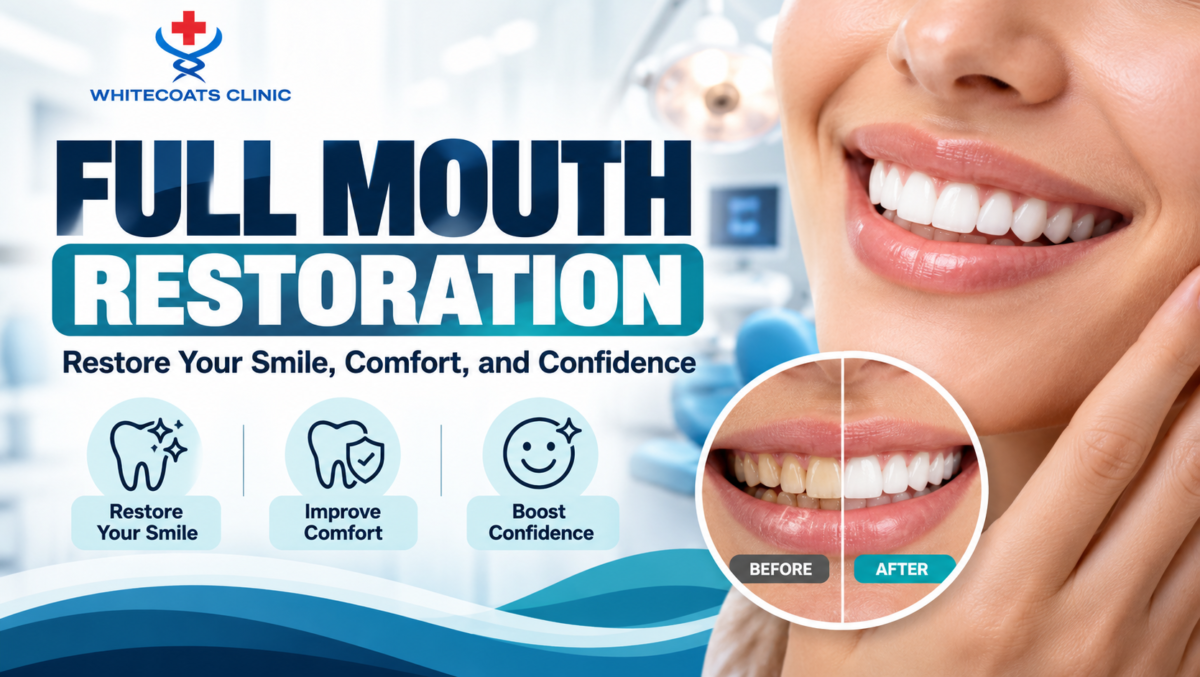
A healthy smile is important not only for your appearance but also for everyday activities such as chewing, speaking, and enjoying your favourite foods. However, damaged, missing, worn-down, or severely decayed teeth can affect oral health, bite function, and confidence. When several teeth need treatment, full mouth restoration may help rebuild the health, function, and appearance of your smile.
At Whitecoats Clinic, Gurgaon, patients can explore dental care options based on their individual oral health needs. Full mouth restoration involves a personalised treatment plan that may combine restorative, preventive, and cosmetic dental procedures to address multiple dental concerns.
What Is Full Mouth Restoration?
Full mouth restoration, also known as full mouth rehabilitation, is a comprehensive dental treatment approach designed to restore or rebuild most or all of the teeth in the upper and lower jaws.
Unlike a single filling or crown, this treatment addresses several dental problems together. The dentist evaluates the condition of your teeth, gums, bite, and jaw function before recommending suitable procedures.
Depending on your needs, full mouth restoration may include dental crowns, bridges, dental implants, root canal treatment, gum treatment, dentures, or orthodontic treatment. Not every patient requires all these procedures. Your treatment plan depends on the condition of your teeth, gum health, bone support, and overall oral health.
Who May Need Full Mouth Restoration?
Full mouth restoration may be considered for people experiencing multiple dental problems, including:
- Multiple missing teeth: Missing teeth can make chewing difficult and may affect the position of neighbouring teeth.
- Severely worn teeth: Teeth worn down by grinding, erosion, or long-term wear may need restorative treatment.
- Extensive tooth decay: Several teeth affected by cavities may require fillings, root canal treatment, or crowns.
- Broken or damaged teeth: Cracked, fractured, or weakened teeth may need restoration to improve function and protect the remaining tooth structure.
- Bite problems: An uneven bite or damaged teeth may affect comfortable chewing and require careful assessment.
- Old or failing dental restorations: Worn-out crowns, bridges, or dentures may need repair or replacement.
- Advanced dental damage: A combination of tooth loss, gum problems, and damaged teeth may require a coordinated treatment plan.
A dental examination is necessary to determine whether full mouth restoration is appropriate or whether a more limited treatment would be sufficient.
Common Procedures Used in Full Mouth Restoration
Full mouth restoration is not one single procedure. It may involve a combination of treatments selected according to your dental condition.
1. Dental Crowns
Dental crowns cover and protect teeth that are weakened, heavily filled, broken, or treated with a root canal when a crown is indicated. They help restore the tooth’s shape, strength, and function.
2. Dental Bridges
Dental bridges replace one or more missing teeth by using support from neighbouring teeth or, in some cases, dental implants. They can help improve chewing and restore gaps in the smile.
3. Dental Implants
Dental implants are placed in the jawbone to support replacement teeth. Depending on the patient’s bone health and treatment needs, implants may support individual crowns, bridges, or implant-supported full-arch teeth.
Not everyone is a suitable candidate for implants immediately. Gum health, bone volume, medical history, and other factors must be assessed first.
4. Root Canal Treatment
When the pulp inside a tooth becomes infected or severely inflamed, root canal treatment may help preserve the natural tooth. The tooth may then need a suitable final restoration to protect it.
5. Gum Disease Treatment
Healthy gums provide essential support for natural teeth and dental restorations. If gum disease is present, periodontal treatment may be needed before or alongside restorative procedures.
6. Dentures and Full-Arch Tooth Replacement
For patients who have lost many or all teeth, removable dentures or implant-supported full-arch restorations may be options. The choice depends on oral health, bone support, comfort preferences, maintenance needs, and budget.
7. Orthodontic Treatment
In selected cases, braces or clear aligners may help correct tooth positioning and improve the bite before restorative work is completed.
What Are the Benefits of Full Mouth Restoration?
When planned appropriately, full mouth restoration may offer several benefits:
- Improved chewing: Replacing missing teeth and restoring damaged teeth may help make eating more comfortable.
- Better oral function: Appropriate restorations can help improve speech and the way teeth meet during biting.
- A more balanced smile: Restorative and cosmetic procedures may improve the shape, colour, and alignment of visible teeth.
- Protection for weakened teeth: Suitable restorations can help protect remaining tooth structure.
- Personalised dental care: A coordinated plan allows the dentist to consider several dental concerns together.
- Improved confidence: Addressing visible tooth damage or missing teeth may help patients feel more comfortable smiling.
Results vary according to the patient’s oral health, the procedures selected, and how well the restorations are maintained. No treatment can guarantee a particular cosmetic or functional outcome.
What Is the Full Mouth Restoration Process?
The process usually involves several stages.
Step 1: Dental Consultation and Examination
The dentist discusses your concerns, dental history, expectations, and any pain or difficulty with chewing. The examination may include assessment of your teeth, gums, bite, and jaw function.
Step 2: Diagnostic Tests
Depending on the case, dental X-rays, photographs, impressions, or digital scans may be required. These help the dentist assess tooth roots, bone support, missing teeth, and the relationship between the upper and lower jaws.
Step 3: Personalised Treatment Planning
The dentist explains the recommended procedures, their sequence, expected timeline, alternatives, costs, and potential risks. Active infection or gum disease may need to be treated before definitive restorations are placed.
Step 4: Preparatory Treatment
This stage may involve cleaning, gum treatment, fillings, root canal treatment, or extraction of teeth that cannot be predictably restored. Temporary restorations may be used where appropriate.
Step 5: Restorative Procedures
Depending on the treatment plan, crowns, bridges, implants, dentures, or other restorations are placed. Some treatments can be completed relatively quickly, while implant treatment may require several months for healing.
Step 6: Follow-Up and Maintenance
The dentist checks the fit and function of the restorations and provides instructions for cleaning and care. Regular dental visits help monitor gum health, bite changes, and the condition of the restorations.
How Long Does Full Mouth Restoration Take?
The duration depends on the complexity of the case and the treatments required. Some patients may complete treatment over several weeks, while others may need several months or longer.
Procedures involving dental implants can take additional time because the implants may need to integrate with the jawbone before the final teeth are attached. Gum treatment, healing, orthodontics, or complex bite correction can also extend the timeline.
Your dentist can provide a more realistic estimate after examining your teeth and preparing a treatment plan.
Is Full Mouth Restoration Painful?
The level of discomfort depends on the procedures involved. Local anaesthesia is commonly used for treatments such as fillings, root canal procedures, and many restorative or surgical treatments. Some tenderness or sensitivity may occur afterwards.
Your dentist can explain pain-management options and aftercare instructions based on your treatment. Inform the dental team about any medical conditions, medications, allergies, or concerns about dental anxiety before treatment begins.
How Much Does Full Mouth Restoration Cost in Gurgaon?
The cost of full mouth restoration in Gurgaon varies from patient to patient. There is no single fixed price because the treatment plan may involve different procedures and materials.
Factors that can influence the total cost include:
- Number of teeth requiring treatment
- Number and type of crowns or bridges
- Whether dental implants or bone grafting are needed
- Extent of gum disease or tooth decay
- Need for root canal treatment or extractions
- Type of dentures or restorative materials selected
- Complexity and duration of treatment
A dental consultation is the best way to receive an individualised estimate. Ask for a written treatment plan that outlines the recommended procedures, alternatives, costs, and expected timeline before beginning treatment.
How to Maintain Your Results After Full Mouth Restoration
Good oral hygiene and regular professional care are important for protecting your natural teeth and dental restorations.
- Brush twice daily with fluoride toothpaste.
- Clean between your teeth daily using floss or an appropriate interdental cleaner.
- Follow your dentist’s instructions for cleaning bridges, dentures, and implant-supported teeth.
- Attend regular dental check-ups and professional cleaning when recommended.
- Avoid chewing ice or using your teeth to open packages.
- If you grind your teeth, ask your dentist whether a night guard may be appropriate.
- Contact your dentist if a restoration becomes loose, cracks, causes persistent discomfort, or changes your bite.
Dental restorations can last for many years, but their lifespan depends on the material used, oral hygiene, biting forces, and regular maintenance.
Why Consider Whitecoats Clinic for Full Mouth Restoration in Gurgaon?
Choosing a dentist for extensive restorative work starts with a detailed assessment and a clear discussion of your treatment options. Whitecoats Clinic lists full mouth restoration, dental implants, crowns and bridges, endodontics, and periodontics among its dental specialties.
Patients can discuss their dental concerns with the clinic’s dental team and learn which procedures may be suitable for their individual needs. A clear treatment plan should explain the proposed sequence of care, expected benefits, possible risks, costs, and follow-up requirements.
Book a dental consultation at Whitecoats Clinic to discuss damaged or missing teeth and understand your options for restoring your smile.
Frequently Asked Questions About Full Mouth Restoration
1. What is the difference between full mouth restoration and a smile makeover?
Full mouth restoration focuses on restoring oral health, chewing function, and the condition of damaged or missing teeth. A smile makeover generally focuses more on appearance, although cosmetic and restorative treatments may overlap.
2. Can full mouth restoration replace all my teeth?
It can include replacement of all teeth in one or both jaws when clinically appropriate. Options may include complete dentures or implant-supported full-arch teeth. The right approach depends on your oral health, bone support, medical history, and preferences.
3. Is full mouth restoration suitable for older adults?
Age alone does not determine suitability. The dentist considers gum health, bone condition, medical history, medications, and the patient’s ability to maintain the restorations.
4. Can full mouth restoration be completed in one day?
Some selected full-arch implant cases may allow temporary teeth to be attached on the same day as implant placement. However, this is not suitable for everyone, and temporary teeth are not necessarily the final restorations. Many full mouth restoration plans require multiple appointments.
5. Are dental implants always necessary for full mouth restoration?
No. Depending on the case, treatment may involve crowns, bridges, dentures, fillings, root canal treatment, or other procedures. Implants are considered when appropriate for replacing missing teeth.
6. How long do full mouth restorations last?
There is no single lifespan for all restorations. Longevity depends on the type of treatment, material, oral hygiene, bite forces, and maintenance. Regular dental reviews help identify problems early.
7. Can full mouth restoration improve chewing?
It may improve chewing when missing or damaged teeth are restored appropriately. The extent of improvement depends on the underlying condition and the treatment provided.
8. Is full mouth restoration expensive?
The cost depends on the number of teeth involved, the procedures needed, and the materials selected. A personalised examination and written estimate can help you understand the overall cost.
9. Do I need to treat gum disease before full mouth restoration?
If gum disease is present, it often needs to be managed before definitive restorations are completed. Healthy gums and adequate supporting bone are important for the long-term success of many dental treatments.
10. Where can I consult a dentist for full mouth restoration in Gurgaon?
You can contact Whitecoats Clinic to enquire about a consultation for full mouth restoration and discuss your dental concerns with its team.
Conclusion
Full mouth restoration can help address complex dental problems involving damaged, worn, or missing teeth. By combining appropriate restorative, preventive, and cosmetic procedures, a dentist can develop a treatment plan aimed at improving oral function and the appearance of your smile.
If you are experiencing difficulty chewing, have several damaged teeth, or have lost multiple teeth, consider arranging a dental examination at Whitecoats Clinic in Gurgaon to discuss your treatment options.